How to Choose the Right International School in Singapore
Published May 2026

Choosing an International School in Singapore?
Choosing an international school is one of the biggest decisions your family will make when moving to Singapore. With more than 60 international schools on the island, each offering a different curriculum, culture and community, the options can feel overwhelming.
This guide is written for expatriate families who want a clear, practical framework for making this decision well. Whether you are relocating for work, returning to Asia or considering Singapore for the first time, these are the factors that matter most. If you are moving from the UK specifically, our guide to relocating to Singapore as a British family covers visas, cost of living and settling in.
1. Start Your Research Before You Arrive
The best time to begin researching schools is before you land in Singapore. Most international schools accept applications year-round, but places in popular year groups fill quickly. Starting early gives you more options.
Begin with school websites. Look beyond the homepage and read the curriculum pages, fee schedules, admissions requirements and parent handbooks. These documents reveal how a school communicates and what it prioritises.
Join online communities such as Facebook groups for expats in Singapore, where parents share first-hand experiences. Forums like Singapore ExpatForum and local parenting sites also offer candid perspectives that brochures do not.
Make a shortlist of three to five schools. Trying to evaluate more than that becomes impractical. Focus your shortlist on schools that match your child’s age group, your preferred curriculum and your family’s location.
2. Understanding the Curriculum Options in Singapore
Singapore’s international schools offer several curriculum pathways. Each has a different philosophy, assessment style and university preparation approach. The right curriculum depends on your child’s learning style, your family’s plans and where you see your child studying at university.
| Curriculum | Structure | Assessment | Best Suited For |
|---|---|---|---|
| British (IGCSE + A-levels) | Structured progression through key stages. Subject specialisation from age 16. | External examinations | Pupils who thrive with depth and subject focus |
| American | Broad course load through high school. AP courses available. | Continuous assessment + standardised tests | Families planning to return to the US or preferring breadth |
| International Baccalaureate (IB) | Six subject groups plus core components (TOK, EE, CAS) | Exams + internal assessments + coursework | Pupils who enjoy interdisciplinary learning |
| Australian | State-based curricula with senior secondary certificates | Mix of exams and coursework | Families with ties to Australia or New Zealand |
| Singaporean (MOE) | National curriculum with PSLE, O-levels, A-levels | National examinations | Families settling long-term in Singapore |
At Brighton College (Singapore), we follow the British curriculum through IGCSE and A-levels. This pathway gives pupils the freedom to specialise in subjects they are passionate about, while building genuine depth of knowledge. For families considering the differences between British and IB pathways, our guide to A-levels vs IB in Singapore provides a detailed comparison.
3. What Matters Most to Your Family
Every family has different priorities. Before you visit any school, have an honest conversation about what matters most to you and your family. This saves time and prevents decision fatigue.
Consider these factors:
- Academic philosophy – Does the school prioritise depth or breadth? Exam results or holistic development? Both approaches have merit; the question is which suits your child.
- Class sizes – Smaller classes allow teachers to know each pupil individually. Ask for average class sizes, not just the maximum.
- Pastoral care – How does the school support pupil wellbeing? Is there a dedicated pastoral team? How are issues such as bullying or homesickness handled?
- Diversity – How many nationalities are represented? A diverse school community helps children develop cultural fluency and adaptability.
- Values – What values does the school actively teach? At Brighton College (Singapore), our three core values are kindness, curiosity and confidence. These are not just words on a wall; they shape how pupils interact with one another and approach their learning.
- Language support – If English is not your child’s first language, check what English as an Additional Language (EAL) programmes are available.
4. Visting Schools in Person
A school tour tells you more in 90 minutes than weeks of online research. Visit during a normal school day, not just during open house events. You want to see the school as pupils experience it every day.
During your visit, pay attention to:
- Pupil behaviour – Are children engaged in their lessons? Do they greet visitors politely? Are corridors calm or chaotic?
- Teacher interaction – Watch how teachers speak to pupils. Do they know their names? Are questions encouraged?
- Facilities – Look at classrooms, science laboratories, libraries, art studios and sports facilities. Are they well maintained and actively used?
- Outdoor spaces – Singapore’s climate allows for year-round outdoor learning and play. Check that the school makes use of this.
- Atmosphere – Trust your instincts. A school should feel welcoming, purposeful and safe.
Prepare a list of questions for the admissions and leadership team and, if possible, ask to speak with current parents. Their perspective is invaluable.
We welcome families to visit Brighton College (Singapore) during our weekly open mornings, or you can book a personalised tour at a time that suits you.
5. Admissions Process and Timeline
Most international schools in Singapore accept rolling admissions, meaning you can apply throughout the year. However, the main intake period is August or September for schools following a Northern Hemisphere calendar.
A typical admissions process includes:
- Enquiry – Submit an initial enquiry or attend an open event.
- Application – Complete the application form and provide supporting documents. These usually include previous school reports, passport copies, immunisation records and a recent photograph.
- Assessment – Some schools require an entrance assessment or interview, particularly for older year groups. This helps the school understand your child’s academic level and any additional support they may need.
- Offer – If a place is available, the school will issue an offer letter. You will typically have around one to two weeks to accept and pay the registration fee.
It is advisable to apply early. Waiting lists are common for popular year groups, especially in Reception, Year 1 and Year 7. If you know your relocation date, begin the application process at least six to twelve months in advance.
You can find full details of our admissions process at Brighton College (Singapore).
6. Fees and Costs to Expect
International school fees in Singapore vary widely. Annual tuition typically ranges from SGD 20,000 for early years to SGD 50,000 or more for senior school, depending on the school and curriculum.
Whilst tuition fees form the bulk of the costs, you may also need to budget for these additional costs:
- Registration and enrolment fees – A one-time charge, usually between SGD 2,000 to SGD 5,000.
- School bus transport – SGD 2,000 to SGD 5,000 per year, depending on distance.
- Uniforms and school supplies – Varies by school.
- Co-curricular activities – Some are included in tuition; others carry a separate fee.
- School trips and overseas excursions – Especially relevant in senior school.
Many employers include an education allowance in expatriate relocation packages. Check your employment terms early, as this often influences which schools are financially viable options.
For a full breakdown of our fee structure, visit the Brighton College (Singapore) term dates and fees page.
7. Location and School Transport
As Singapore is geographically small, most journeys across the island take less than 45 minutes. This means location is a factor, but not a limiting one.
International schools are concentrated in several areas, including the East Coast, Bukit Timah, Holland Village and the Central region. Many families choose to live near their chosen school, but school bus services make longer commutes manageable.
When evaluating location, consider:
- Proximity to your home or planned housing area
- Availability and cost of the school bus service
- Access to public transport (MRT stations nearby)
- Proximity to your workplace, especially for younger children who may need to be picked up at short notice
8. Co-Curricular Activities and Enrichment
Academic results matter, but they are only part of the picture. Co-curricular activities (CCAs) develop teamwork, creativity, resilience and leadership. They also help children settle into a new school and build friendships quickly.
When evaluating a school’s co-curricular programme, ask:
- How many activities are offered and in which categories (sport, performing arts, STEAM, community service)?
- Are activities included in tuition or charged separately?
- How are pupils encouraged to try new things?
- Are there competitive teams as well as recreational options?
A strong co-curricular programme reflects a school that values the whole child, not just examination results.
9. Accreditations and School Standards
Accreditation provides independent verification that a school meets recognised educational standards. In Singapore, the Private Education Act requires international schools to be registered with Skills and Workforce Development Agency (SWDA) and meet basic requirements on information disclosure, academic processes and corporate governance.
Beyond registration with SWDA, look for other accreditations or quality assurances such as:
- EduTrust Certification Scheme – This quality assurance scheme assesses a private school’s academic processes, corporate governance and administration, quality management and the protection and welfare of pupils.
- CIS (Council of International Schools) – A global accreditation body that evaluates schools against rigorous standards for governance, teaching and learning.
- COBIS (Council of British International Schools) – Specifically for British curriculum schools, ensuring they maintain the standards expected of British independent education.
- WASC (Western Association of Schools and Colleges) – Common among American curriculum schools.
Accreditation is not a guarantee of quality, but it does indicate that a school has undergone external review and meets a recognised threshold. Ask which accreditations a school holds and when they were last renewed.
Brighton College (Singapore) is part of the Brighton College family of schools, which includes Brighton College UK, named UK School of the Decade by The Sunday Times. You may view our awards and accreditations for full details.
Frequently Asked Questions
What age can children start at an international school in Singapore?
Most international schools accept children from 18 months or 2 years old in their nursery or pre-nursery programmes. Compulsory education in Singapore begins at age 6, but many families enrol earlier to secure a place and allow their child to settle.
How much do international schools cost in Singapore?
Annual tuition fees range from approximately SGD 15,000 for early years to SGD 50,000 or more for senior school. Total costs including transport, uniforms and activities can add SGD 5,000 to SGD 10,000 per year. Many expatriate packages include an education allowance.
When should I apply to an international school in Singapore?
Apply six to twelve months before your intended start date. Popular year groups fill quickly, and waiting lists are common. Most schools accept rolling admissions, but the main intake aligns with the start of the academic year in August or September.
Can my child join an international school mid-year?
Yes. Most international schools in Singapore accept mid-year enrolments, subject to availability. Schools are accustomed to welcoming families who relocate at different times of the year. Your child’s transition will be supported through orientation and, where needed, additional pastoral care.
What is the difference between British and American curricula?
The British curriculum follows a structured progression through key stages, leading to IGCSE examinations at age 16 and A-levels at age 18. It emphasises subject depth and specialisation. The American curriculum maintains a broader course load through high school, with Advanced Placement (AP) courses available for university-level study. For more detail, read our guide to the British education system.
Do international schools in Singapore follow MOE guidelines?
International schools must register with the SWDA under the Private Education Act and comply with regulatory requirements. However, they follow their own curricula rather than the Singapore national curriculum. SWDA conducts periodic reviews to ensure schools meet operational and safety standards.
How do I choose between IB and A-levels?
The IB Diploma offers breadth across six subject groups with compulsory core components. A-levels offer depth, allowing pupils to specialise in three or four subjects of their choice. The best fit depends on your child’s learning style and academic goals. We explore this in detail in our comparison of A-levels and the IB.
What support do schools offer for children who do not speak English?
Many international schools offer English as an Additional Language (EAL) programmes. These provide structured support to help pupils develop English proficiency alongside their academic studies. At Brighton College (Singapore), our EAL programme is designed to integrate pupils into mainstream classes as quickly as possible while supporting their language development.
Discover Brighton College (Singapore)
Choosing an international school is a significant decision, and it deserves careful thought. Visit schools, ask questions, involve your child in the conversation and trust your judgement about where they will be happiest and most supported.
If you are considering Brighton College (Singapore), we would be glad to welcome you. Book a personalised tour or make an enquiry to start a conversation with our admissions team.

Join us at an Open House
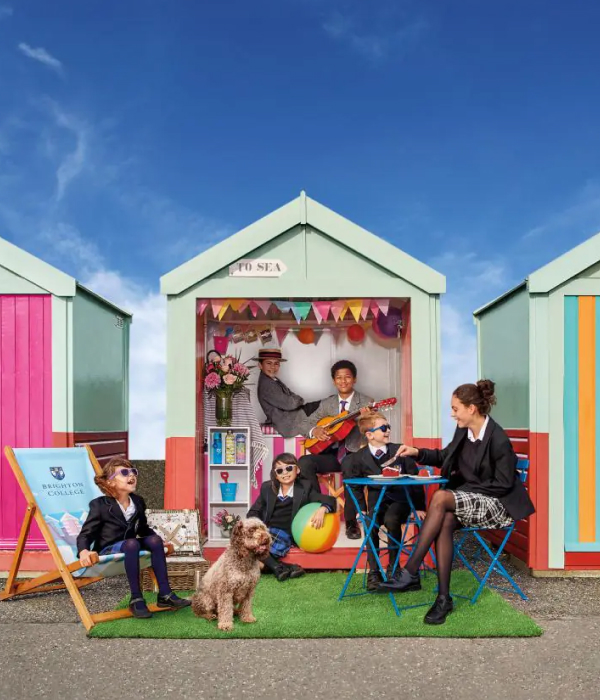
The best way to experience what life is like at Brighton College (Singapore) is to join us at an Open House, where you will have the chance to talk to pupils and teachers about what makes our school such a special place, and to answer any questions you have about life here.